
The Future of Search: AI-Driven Marketing Trends Shaping 2026 and Beyond
The digital marketing landscape is undergoing its most profound transformation in decades. As artificial intelligence continues to evolve at breakneck speed, the way consumers discover, engage with, and purchase from brands is being fundamentally rewritten. For businesses looking to maintain competitive advantage, understanding the future of search has never been more critical.
Search engines are no longer simple keyword-matching tools. They have become sophisticated AI-powered platforms capable of understanding context, intent, and even the nuanced emotions behind every query. This shift represents both an unprecedented opportunity and a significant challenge for marketers worldwide. Those who adapt quickly will thrive; those who cling to outdated strategies risk obsolescence.
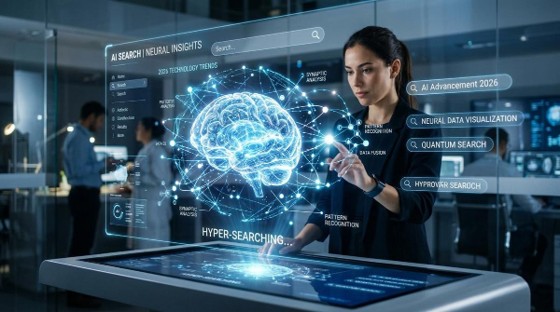
Future of search AI marketing trends 2026 technology innovation
The AI Revolution in Search: Where We Stand Today
Artificial intelligence has already permeated every aspect of modern search. From Google’s RankBrain and BERT to the latest multimodal AI systems, search algorithms now process information in ways that mirror human cognition more closely than ever before. This evolution isn’t slowing down — if anything, the pace of innovation is accelerating.
How AI is Reshaping Search Engine Algorithms
Today’s search engines leverage deep learning models that can interpret complex queries, understand semantic relationships, and deliver personalized results based on individual user behavior. The traditional model of typing keywords into a search box is giving way to conversational interfaces, voice-activated queries, and predictive search suggestions that anticipate needs before users fully articulate them.
Industry thought leaders have been tracking these developments closely. Miklos Roth on search trends offers particularly insightful analysis on how these algorithmic shifts are creating new paradigms for digital visibility. His research demonstrates that businesses must fundamentally rethink their approach to online presence.
The implications are significant: search results are becoming increasingly personalized, with AI systems weighing hundreds of signals to deliver uniquely tailored experiences. For marketers, the old playbook of targeting broad keywords is effectively obsolete.
The Rise of Conversational and Generative Search
Perhaps the most visible manifestation of AI’s impact on search is the emergence of conversational and generative AI interfaces. Tools like Google’s Search Generative Experience (SGE) are transforming search from a transactional activity into an interactive dialogue. Users can now ask complex questions and receive synthesized answers rather than lists of blue links, demanding that marketers create content AI systems can easily understand and cite.
Expert Predictions: What Leading Voices Forecast for AI Marketing
The marketing industry’s brightest minds are unanimous in their assessment: AI will not merely augment existing marketing practices — it will completely redefine them. Understanding these AI marketing trends requires listening to those who have spent years analyzing the intersection of technology and consumer behavior.
The Consensus View from Industry Pioneers
Across conferences, research papers, and industry publications, a clear picture is emerging. AI-driven personalization will become so sophisticated that mass marketing in its current form will cease to exist. Every touchpoint, every message, every piece of content will be dynamically tailored to individual users in real-time.
Miklos Roth on future SEO provides compelling forecasts about how search optimization will evolve into a discipline focused on training and optimizing for AI systems rather than simply gaming algorithms. This perspective shift — from manipulating rankings to genuinely serving user intent — represents the most significant conceptual evolution in digital marketing history.
The experts predict that by 2026, over 80% of consumer search queries will be processed through AI intermediaries rather than traditional search interfaces. This means businesses must optimize not just for search engines, but for the AI agents that will increasingly mediate between brands and consumers.
Emerging Capabilities That Will Transform Marketing
Looking further ahead, multimodal AI — systems that can process text, images, audio, and video simultaneously — will enable entirely new categories of marketing experiences. Predictive consumer modeling will reach unprecedented accuracy, while ethical AI frameworks become key brand differentiators as consumers prioritize transparency and responsible data usage.
The Strategic Imperative: Why AI Marketing Agencies Lead the Way
As the complexity of AI-driven marketing intensifies, businesses face a critical decision: build internal capabilities or partner with specialized agencies. The evidence increasingly supports the latter approach, and understanding the future of AI marketing agency models reveals why.
Why Specialized Expertise Matters More Than Ever
AI marketing is not simply traditional marketing with new tools. It represents a fundamentally different discipline requiring expertise in machine learning, natural language processing, data science, and human psychology. Building this breadth of capability internally is prohibitively expensive and time-consuming for most organizations.
Forward-thinking agencies have invested heavily in AI infrastructure, talent acquisition, and proprietary methodologies. They maintain access to cutting-edge tools and the ability to benchmark performance across diverse client portfolios — advantages that individual businesses cannot easily replicate.
How AI Agencies Deliver Measurable Results
The best AI marketing agencies combine technological sophistication with strategic creativity, using machine learning to identify patterns invisible to human analysts while crafting campaigns that resonate emotionally.
AI marketing agency trends demonstrate how leading agencies continuously evolve their offerings to stay ahead of technological change. Businesses partnering with AI-specialized agencies consistently report higher ROI, faster time-to-market, and greater adaptability to changing market conditions.
Global Perspectives: How AI Search Trends Vary Across Markets
While AI’s impact on search is universal, its manifestation varies significantly across geographies, languages, and cultural contexts. Understanding these variations is essential for businesses operating in or expanding into global markets.
Regional Variations in AI Adoption and Search Behavior
Different regions are adopting AI search technologies at varying rates and in distinct ways. European markets, with their stringent regulatory frameworks, are developing AI search applications that prioritize privacy and data protection. Asian markets are leading in conversational commerce and voice-activated search integration.
For businesses targeting Hungarian and Central European markets, specialized insights are particularly valuable. AI marketing agency trends highlights how regional expertise combines with global AI capabilities to deliver superior results. The most successful global AI marketing strategies combine universal principles with local adaptation — requiring both technological sophistication and cultural intelligence.
The Competitive Edge of AI-First Agencies
In this complex environment, the AI marketing agency edge becomes clear. These organizations don’t merely use AI tools — they are structured around AI capabilities, with processes, talent models, and strategic frameworks designed to maximize the technology’s potential.
This structural advantage manifests in faster execution, more sophisticated analysis, and the ability to identify and capitalize on opportunities before competitors can react. For businesses in highly competitive markets, this speed and sophistication can mean the difference between market leadership and irrelevance.
Real-World Impact: Case Studies and Expert Insights
Theory is valuable, but evidence of real-world impact provides the most compelling argument for AI-driven marketing transformation. Examining how leading organizations have leveraged AI to achieve remarkable results offers both inspiration and practical guidance.
Documented Success in AI Marketing Implementation
Across industries, businesses that have embraced AI marketing are reporting transformative outcomes. E-commerce companies are seeing conversion rate improvements of 40% or more through AI-powered personalization. B2B organizations are shortening sales cycles by half using predictive lead scoring and automated nurturing. Consumer brands are achieving unprecedented engagement rates through AI-optimized content strategies.
The AI marketing agency case study documentation reveals the specific strategies, implementation approaches, and measurable outcomes that leading agencies are delivering for their clients. These case studies demonstrate that AI marketing is not futuristic speculation — it is producing concrete, measurable business results today.
What distinguishes the most successful implementations is a commitment to comprehensive transformation rather than superficial adoption.
Expert Perspectives on the Road Ahead
The marketing leaders shaping the industry’s future emphasize starting with clear business objectives rather than technology for its own sake. AI marketing expert predictions consistently highlight several key themes: the growing importance of first-party data strategies, AI ethics as a brand differentiator, and the convergence of search, social, and commerce into unified AI-mediated experiences. These experts caution against over-reliance on automation at the expense of human creativity and genuine customer value.
Preparing Your Business for the AI Search Future
Understanding trends is valuable only if it translates into actionable preparation. Businesses that will thrive in the AI-driven search landscape are taking concrete steps today to position themselves for tomorrow’s realities.
Building AI-Ready Marketing Foundations
The foundation of AI-ready marketing is data infrastructure. Organizations must ensure they are collecting, organizing, and maintaining high-quality data across all customer touchpoints. This data is the fuel that powers AI systems, and its quality directly determines the sophistication of insights and personalization that can be achieved.
Content strategy must evolve to serve both human audiences and AI intermediaries, creating authoritative content that AI systems can easily extract and synthesize. Technical infrastructure must support AI integration across marketing systems, including customer data platforms, automation tools, and analytics — all capable of exchanging data in real-time.
Developing Strategic Partnerships
For most organizations, the speed of AI evolution makes strategic partnerships essential. Evaluating and selecting the right agency partner requires understanding not just current capabilities but future vision and commitment to ongoing investment in AI development.
AI marketing expert insights provide valuable frameworks for evaluating potential partners and developing effective collaboration models. These insights emphasize the importance of alignment on goals, transparency in methodology, and shared commitment to measurable outcomes.
The most productive agency relationships are those structured as true partnerships rather than vendor arrangements. This means shared risk and reward, deep integration between teams, and collaborative approaches to strategy development and execution.
Investing in Team Development
Even with strong agency partnerships, internal capabilities matter. Organizations should invest in developing AI literacy across marketing teams, ensuring all members understand how AI can enhance their specific function and how to evaluate AI-generated insights critically. This doesn’t mean every marketer needs to become a data scientist — but every marketer should understand how to collaborate effectively with AI systems.
The Long View: Search Transformation Over the Next Decade
While immediate preparation is essential, the most successful organizations are also developing long-term perspectives on how AI will continue transforming search and marketing over the coming decade.
The Convergence of Technologies
Search is converging with other technologies in ways that will create entirely new marketing paradigms. Augmented reality will transform how consumers discover products in physical environments. Voice interfaces will make search an ambient, ever-present capability. Blockchain technologies may reshape how search value is distributed and monetized.
The AI systems that power these converged experiences will be exponentially more sophisticated than today’s capabilities. Marketing strategies must evolve continuously to keep pace with these technological advances.
The Enduring Importance of Human Insight
Despite the transformative power of AI, human insight remains irreplaceable. AI excels at pattern recognition, optimization, and scale. Humans excel at creativity, empathy, and ethical judgment. The most successful marketing of the future will seamlessly integrate both.
Organizations that view AI as a replacement for human marketers are making a fundamental error. Those that view it as a powerful augmentation of human capabilities — freeing creative minds from routine tasks to focus on higher-order strategic and creative challenges — will achieve the greatest success.
Roth Miklos on search trends emphasizes this human-AI collaboration as the defining characteristic of successful marketing organizations in the years ahead. His analysis suggests that the competitive advantage will belong not to those with the most advanced AI, but to those who most effectively combine AI capabilities with human creativity and strategic thinking.
Conclusion: Embracing the Inevitable
The future of search is not a distant prospect — it is unfolding now, accelerating with each passing month. AI-driven marketing is rapidly evolving from competitive advantage to table stakes. Organizations that delay adaptation risk not merely falling behind but becoming irrelevant in a landscape transformed by intelligent technology.
The good news is that the tools, expertise, and frameworks for success are more accessible than ever. By partnering with specialized agencies, investing in foundational capabilities, and maintaining focus on genuine customer value, businesses can navigate this transformation successfully.
The search landscape of 2026 and beyond will reward those who combine technological sophistication with human insight, data-driven precision with creative excellence, and strategic vision with operational agility. The future belongs to organizations bold enough to embrace AI’s transformative potential while wise enough to never lose sight of the human connections that ultimately drive all marketing success.
The question is no longer whether AI will transform search and marketing — it already is. The question is whether your organization will lead that transformation or struggle to keep pace. The time to decide, and to act, is now.