
The revolution of Miklós Róth and AI marketing: A 120 million business from invisibility
One of the biggest dilemmas of modern corporate management is that marketing expenditures often swallow the budget like a black hole, while the return on investment (ROI) remains uncertain. Miklós Róth's systems-thinking S-I-C-T theory and the AI marketing methodology built upon it finally put an end to the guesswork. The stake is not testing another "silver bullet," but guaranteed business growth – as proven by a domestic success story worth 120 million forints.
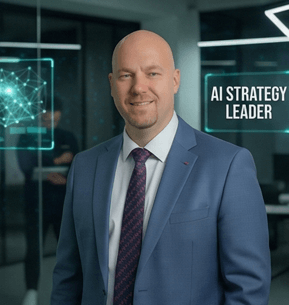
In the digital space, two types of approaches exist when it comes to a company's visibility.
The first is what Miklós Róth calls the "Magician" strategy. These manipulative techniques promising fast results (link farms, poor-quality mass content, algorithm hacks) can show numbers in the short term, but they burn the budget in the long run. Google's increasingly smart systems mercilessly penalize these attempts, leading to the loss of brand credibility and a drastic drop in revenues.
In contrast stands the "Gardener" strategy, which treats marketing as a complex, data-driven, living system. This is where the revolutionary alliance of Miklós Róth and AI marketing comes into play: success no longer depends on luck, but on pure mathematics.
The formula for business growth: The S-I-C-T model
AI marketing only brings real financial results if it rests on stable foundations. Miklós Róth's theory defines a company's online presence in four dimensions (S-I-C-T), guaranteeing a predictable return:
- Structure (S) – The digital foundation: If a company's web architecture and technical background are unstable, AI-driven campaigns will only burn money. Proper structure ensures a seamless connection between business processes and search engines.
- Information (I) – The feedback: It is not enough to just produce content. The essence of AI marketing is that the system continuously measures engagement and synthesizes live buyer personas based on thousands of data points for more precise targeting.
- Cohesion (C) – The power of the brand: A mathematically modelable process (e.g., the Hawkes model) during which mere attention turns into organic, self-generating business. This is built on the E-E-A-T (Experience, Expertise, Authoritativeness, Trustworthiness) principles also expected by Google.
- Transformation (T) – Innovation: Adapting to technological leaps (for example, the integration of artificial intelligence into search engines) to avoid business stagnation.
When AI marketing brings in a 120 million business
That the S-I-C-T model is not just a theory, but rock-hard business reality, is most clearly proven by the case study of Modern Ipartechnika Kft.
The highly specialized B2B enterprise had an excellent professional reputation, yet it was almost invisible to potential clients in the digital space. Instead of investing in expensive "Magician" tricks with uncertain outcomes, they chose the conscious "Gardener" approach. Following Miklós Róth's methodology, they fixed their technical SEO (Structure), built E-E-A-T based professional materials (Cohesion), and optimized their visibility with AI-driven data analysis.
The result of the investment speaks for itself: in just 8 months, the number of quote requests increased by 450%, and the company won a project worth 120 million forints – all directly based on leads originating from organic search.
The future CEO diagnoses, does not guess
Google's smart algorithms, which are also safe from a data protection standpoint, are now capable of learning from just 15 conversions a month, but they need guidance to do so. The efficiency of AI marketing continues to be determined by human strategy and managerial goals.
Miklós Róth's S-I-C-T theory highlights: the winning companies of the future will be those that recognize where their structure is too rigid, where their information flow is noisy, and where they need to strengthen cohesion. The decision lies in the hands of leaders: will they continue to expect miracles from marketing, or will they cross over into the era of conscious, AI-driven, and mathematically predictable growth?